
Brand transformation process explained for leaders

Brand transformation is defined as the structured, strategic process through which a company evolves how it looks, speaks, and behaves to align with its business goals and customer expectations. This goes far beyond a logo refresh. The brand transformation process explained properly covers seven sequential stages: discovery audit, strategy development, positioning, identity creation, guidelines documentation, launch execution, and performance measurement. Skipping any stage, particularly the early discovery phases, is the leading cause of failed brand initiatives. Michaelbell works with marketing teams and business leaders who understand that brand change is a business decision, not a design project.
What are the essential stages in the brand transformation process?
A sequential, research-led framework of seven stages underpins every successful brand transformation. Each stage builds on the last. Removing one creates gaps that surface later as inconsistency, confusion, or wasted budget.
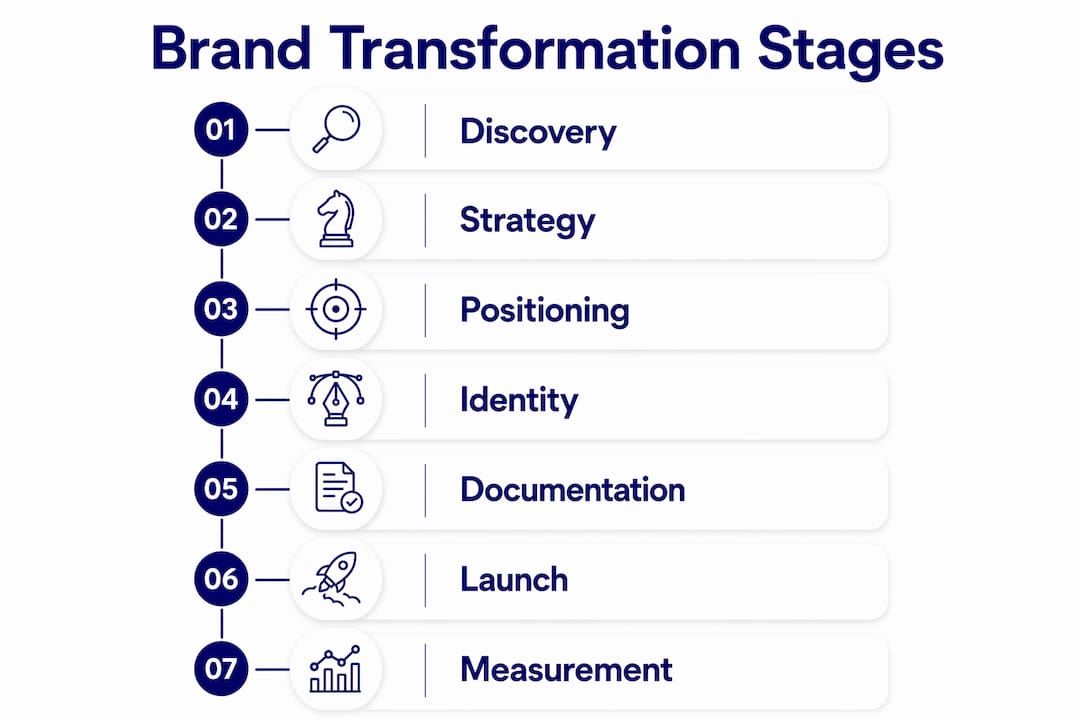
| Stage | Purpose |
|---|---|
| Discovery and audit | Assess current brand perception, market position, and internal misalignment |
| Research and insight | Gather competitor intelligence, customer data, and cultural context |
| Strategy and positioning | Define mission, vision, values, and unique value proposition |
| Identity development | Create verbal and visual identity systems |
| Guidelines documentation | Produce style guides covering all brand touchpoints |
| Launch planning and execution | Coordinate internal and external rollout with asset management |
| Measurement and iteration | Track performance metrics and refine based on data |

The discovery and audit phase is where most organisations underinvest. A brand audit surfaces the gap between how the business sees itself and how customers actually perceive it. Without that clarity, every subsequent decision rests on assumption rather than evidence.
Stakeholder involvement matters at every stage, not just at sign-off. Leaders, marketing teams, and frontline staff each hold different pieces of the brand reality. Pulling those perspectives together early prevents the costly revisions that come from late-stage disagreement.
Pro Tip: Before briefing any creative team, write one plain sentence describing the mismatch between your current brand and your business reality. If you cannot write that sentence clearly, the audit phase is incomplete.
How does strategic brand positioning shape transformation success?
True brand transformation changes how a company looks, speaks, and acts. A visual refresh alone rarely produces meaningful growth. The strategic layer, covering positioning, messaging architecture, and tone guidelines, is what gives the visual identity its meaning and staying power.
Brand positioning defines the specific space your brand occupies in the minds of your customers relative to alternatives. A positioning framework typically anchors on four elements: the audience you serve, the category you compete in, the benefit you deliver, and the reason customers should believe you. Without this framework, design-first approaches waste budget on cosmetic changes that fail to address the underlying strategic issues.
Messaging architecture sits directly beneath positioning. It organises your brand story into a hierarchy: a core brand promise at the top, supporting proof points in the middle, and audience-specific messages at the base. This structure keeps communications consistent whether the channel is a press release, a sales deck, or an internal briefing.
Key elements to define during the strategy stage include:
- Brand mission: why the organisation exists beyond profit
- Brand vision: the future state the brand is working towards
- Core values: the behaviours that define how the brand operates
- Unique value proposition: the specific benefit no competitor delivers in the same way
- Tone of voice: the personality expressed through language across every channel
Pro Tip: Use your positioning framework as a filter for every creative decision. If a design choice or headline cannot be traced back to the positioning, cut it.
What does developing your new brand identity involve?
Brand identity development translates strategic decisions into tangible assets. It covers two parallel workstreams: verbal identity and visual identity. Both must be documented thoroughly before any public-facing asset goes live.
Verbal identity includes your brand voice, tone guidelines, messaging pillars, and tagline. Voice describes the consistent personality behind your words. Tone describes how that personality adapts across contexts: warmer in social media, more precise in technical documentation. A brand messaging framework gives writers and marketers a shared reference point so every piece of content sounds like it comes from the same organisation.
Visual identity covers the elements customers see. The core components are:
- Logo system (primary, secondary, and icon variants)
- Colour palette with primary, secondary, and neutral values
- Typography hierarchy covering headings, body copy, and captions
- Imagery style and photography guidelines
- Iconography and illustration principles
- Layout and grid principles for digital and print
Comprehensive brand guidelines covering all of these elements reduce brand misrepresentation and speed up execution across teams and agencies. A style guide is an operational document, not a vanity project. Teams that work from a shared guide produce consistent work faster and with fewer revision cycles.
The documentation stage also includes templates: email signatures, presentation decks, social media post formats, and document headers. These templates are where guidelines become daily practice. Without them, even the best-designed identity degrades quickly in the hands of a busy team.
How should internal and external brand launches be planned?
The internal launch must come before the external one. Employee alignment builds trust and prevents the external confusion that follows when staff cannot explain the brand change to customers. Your people are the first channel, and they need to understand the reasons behind the transformation before anyone outside the organisation hears about it.
A structured launch sequence looks like this:
- Internal briefing: share the strategy, the story behind the change, and the new brand assets with all staff
- Leadership alignment: ensure senior leaders can articulate the brand story consistently in their own words
- Asset inventory: catalogue every existing brand touchpoint, from business cards to email footers to signage
- High-visibility digital update: change the website, social media profiles, and email signatures simultaneously
- Secondary asset rollout: update printed materials, packaging, and physical environments on a prioritised schedule
- Old asset removal: retire outdated materials immediately to prevent consumer confusion
Prioritising high-visibility touchpoints such as the website and social profiles first creates immediate market impact. Immediate removal of old brand assets is critical during launch. Customers who encounter both old and new branding simultaneously lose confidence in the organisation’s credibility.
Pro Tip: A digitally coordinated launch that updates website, social profiles, and email signatures on the same day creates momentum. Staggered rollouts create confusion. Pick a date and commit to it.
Why is ongoing measurement vital after brand transformation?
Brand transformation does not end at launch. The post-launch period determines whether the investment produces lasting growth or fades into background noise. Performance metrics for brand transformation include website traffic, branded search volume, social engagement, customer retention rates, and revenue growth. Continuous measurement allows iterative improvements rather than waiting for annual reviews to surface problems.
Monitoring should cover both quantitative and qualitative signals:
- Quantitative: branded search volume, direct website traffic, social follower growth, share of voice, net promoter score
- Qualitative: customer interviews, employee sentiment surveys, media coverage tone, sales team feedback on how prospects respond to the brand
Brand equity is built slowly and lost quickly. Consistent application of guidelines across every touchpoint protects the investment made during transformation. Governance processes, such as a brand review committee or a designated brand guardian role, keep standards from slipping as teams grow and change.
Measuring brand awareness with analytics tools gives marketing leaders a clearer picture of whether the transformation is shifting perception at scale. Refresh cycles should be planned proactively rather than reactively. A brand that has not been reviewed in three or more years is likely drifting from its strategic intent, even if no single decision caused the drift.
Key takeaways
A successful brand transformation requires strategic clarity before design, internal alignment before external launch, and continuous measurement after rollout.
| Point | Details |
|---|---|
| Start with a discovery audit | Identify the gap between current brand perception and business reality before any creative work begins. |
| Strategy precedes design | Define positioning, values, and messaging architecture before briefing a design team. |
| Internal launch comes first | Employees must understand and articulate the brand story before external communications go live. |
| Document everything | Comprehensive brand guidelines reduce inconsistency and speed up execution across all teams. |
| Measure continuously | Track branded search, traffic, engagement, and sentiment to refine the brand after launch. |
What I have learned from leading brand transformations
The most common mistake I see is treating brand transformation as a creative project with a strategy wrapper. Leaders approve a brief, a design agency produces beautiful work, and six months later the business wonders why nothing has changed. The problem is almost always that the strategy stage was compressed or skipped entirely.
The brand refresh versus rebrand distinction matters more than most leaders realise. A refresh adjusts visual elements within an existing strategic framework. A transformation changes the framework itself. Confusing the two leads to underinvestment in strategy and overinvestment in design, which produces beautiful assets that say nothing meaningful.
Internal launch is the stage I see deprioritised most often. Marketing teams are understandably eager to go public, but a brand that employees cannot explain is a brand that customers will not trust. The internal briefing is not a formality. It is the moment the brand becomes real for the people who will carry it forward every day.
Stakeholder management during transformation is genuinely difficult. Senior leaders often have strong personal attachments to existing brand elements, particularly if they were involved in creating them. The audit phase, done well, depersonalises those conversations. When the data shows the gap between brand portrayal and business reality, the discussion shifts from opinion to evidence.
My honest advice: lead the transformation initiative with the audit findings, not the creative concepts. Show the problem clearly before you show the solution. That sequence builds the internal confidence that makes external launches land.
— Calum
How Michaelbell supports brand transformation at every stage
Michaelbell works as an embedded partner across the full brand change process, from discovery audit through to post-launch measurement. We bring direct marketing and internal communications expertise together so that your external brand and your internal culture move in the same direction at the same time.
Our team covers the stages where most transformations stall: strategic positioning, messaging architecture, guidelines documentation, and internal launch planning. We work at a fraction of the cost of an in-house agency, with the commitment of one. If you are ready to move beyond cosmetic changes and build a brand that connects with both your customers and your people, explore our brand communications services to see how we work.
FAQ
What is the brand transformation process?
The brand transformation process is a structured sequence of stages covering audit, strategy, identity development, guidelines, launch, and measurement. It changes how a company looks, speaks, and behaves to align with its business goals.
How long does a brand transformation take?
Timelines vary by organisation size and complexity, but a thorough transformation covering all seven stages typically takes several months from discovery to public launch. Rushing the strategy and audit stages is the most common cause of poor outcomes.
What is the difference between a rebrand and a brand transformation?
A rebrand updates visual or verbal elements within an existing strategic framework. A brand transformation changes the strategic framework itself, including positioning, values, and the way the organisation behaves toward customers and employees.
Why does internal launch matter in brand transformation?
Employees are the first channel for any brand. When staff understand the reasons behind the change, they communicate the brand story authentically to customers. Skipping the internal launch creates confusion and undermines public credibility.
What metrics should you track after a brand transformation?
Key metrics include branded search volume, direct website traffic, social engagement, customer retention, and net promoter score. Qualitative signals such as customer interviews and sales team feedback provide context that numbers alone cannot capture.